Heritage
The Bread That Changed Its Mind
28 August 2026
The French left a baguette behind in Saigon. Vietnam kept the shape, rebuilt the loaf and gave it a job.
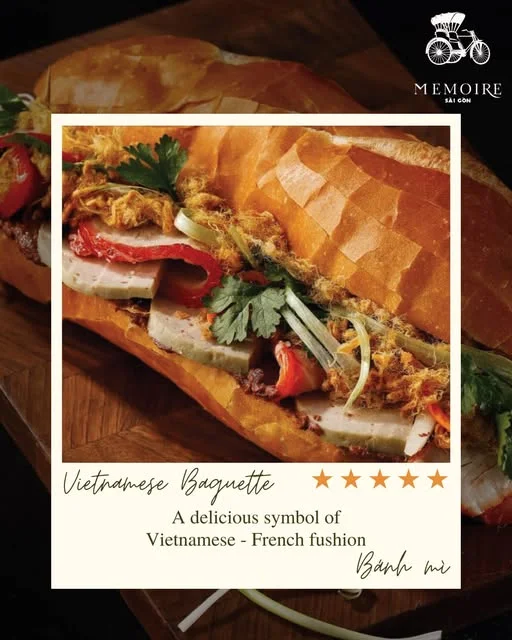
A Vietnamese baguette gives itself away the moment you press it.
The crust is thin and it shatters. The crumb underneath is hollow and light rather than dense and chewy. Rice flour in the dough is the reason for both, and it is why the loaf a bánh mì is built on has stopped being French bread somewhere along the way, whatever it still looks like from the outside.
The French brought the baguette to Saigon and the city took what it wanted. It kept the shape, which was useful, and changed nearly everything else. A lighter loaf holds more filling. A thin crust breaks cleanly instead of fighting you. The whole thing was quietly redesigned for a person eating standing up on a pavement in ten minutes, which is exactly how most bánh mì in Vietnam are still eaten.
Split one open and the order of assembly has not changed in decades. Pâté goes down first, then the meat, then cucumber, then pickled carrot and daikon, then coriander, then chilli if you want it. The pickles are the part visitors most often try to skip, and they are not decoration. They are acid, and they are there to cut through the pâté and the pork. A bánh mì without them is heavy in a way that no amount of good bread will rescue.
Our Memoire Signature is the version we grew up with, which means it is the crowded one. Giò lụa, the smooth steamed pork sausage, sits next to xá xíu and pâté in the same loaf. Three things with no obvious reason to work together, and they work anyway, because each is doing a different job on the texture. If you want the argument settled more simply, there is roast chicken, BBQ pork, crispy belly, or a sautéed tofu and mushroom loaf for whoever is not eating meat.
The same conversation between two kitchens turns up elsewhere on our menu. Bò né arrives as beef on a cast iron skillet with an egg and pâté, and it comes with a baguette so nothing is left on the plate. That dish is a French skillet steak that spent a few generations in Saigon and came out the other side speaking Vietnamese.
Bánh mì travels well, which was the other design brief. Take one down to the harbour, or eat it here while the bread is still warm and the crust still makes a noise.
A hundred years of two kitchens arguing politely, and both of them came out of it better.